Cloudflare has made Application Services for Private Origins generally available. The feature lets internet traffic reach applications that live on private networks without exposing their IP addresses or opening inbound firewall ports. Cloudflare’s normal edge services, including WAF, bot management, rate limiting, caching and Workers, apply along the way. For teams that keep internal APIs, partner portals or admin tools behind a firewall but still need selected outsiders to reach them, it removes the need for a public IP and a hardened DMZ.
What is new
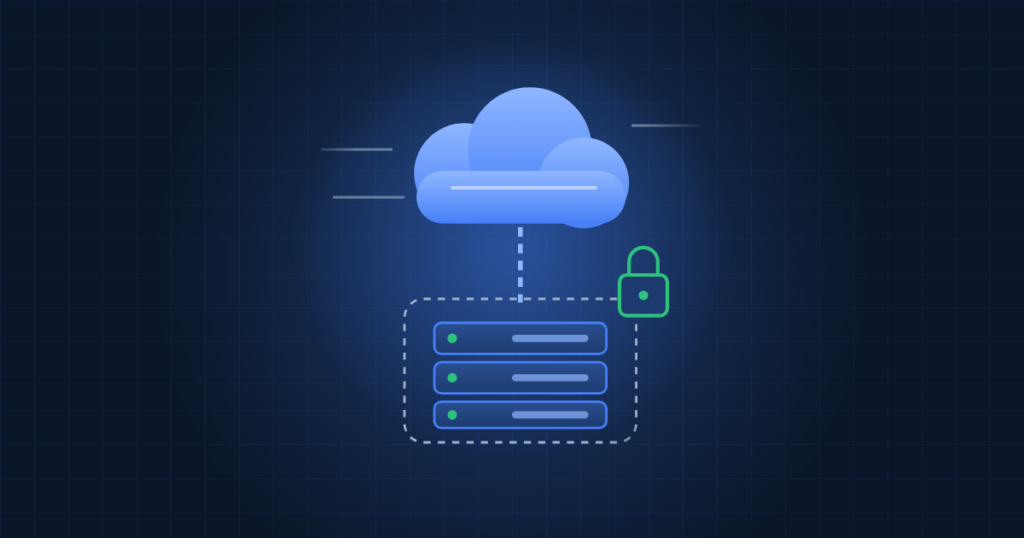
A traditional Cloudflare setup proxies traffic to a public origin IP. That IP can still be found and attacked directly unless you lock the firewall down to Cloudflare’s ranges, and many sites never do. With Private Origins, a proxied DNS record can point straight at a private address. Cloudflare detects the private IP automatically and delivers the traffic over your existing Cloudflare connectivity instead of the public internet.
Cloudflare is aiming this at services that were never designed to face the internet but now have to accept outside requests: internal APIs, AI agent backends, MCP servers and operational tools. Once traffic passes through, your existing WAF, caching and bot management policies apply automatically. Private TCP and UDP origins are supported through Spectrum, and Workers can also connect privately.
Requirements
- A Private Origins entitlement on your Cloudflare account
- Cloudflare One connectivity, such as Cloudflare Tunnel, Cloudflare WAN or Mesh
- Unified Routing, unless you connect through Cloudflare Tunnel
- A proxied DNS record pointing to the private IP, with private network routing enabled (configured through the DNS API)
For Cloudflare WAN and Mesh connections, your network also needs return routes for Cloudflare’s source ranges: 100.64.0.0/12 for IPv4 and 2606:4700:cf1:5000::/64 for IPv6. If those routes are missing, requests reach the origin but the replies never make it back, which looks like a timeout at the edge.
The announcement does not say whether this costs extra or is included in existing contracts. Check with your Cloudflare account team before you plan around it.
How it compares
| Provider | Equivalent feature |
|---|---|
| Cloudflare | Application Services for Private Origins |
| AWS | CloudFront VPC Origins |
| Microsoft Azure | Front Door Premium with Private Link |
If your workloads are all inside one AWS account, CloudFront VPC Origins is the natural fit. Cloudflare’s version is more useful when origins are spread across on-premises racks, colocation, several clouds or a VPS provider with private networking, because one edge policy can cover all of them.
What changes for your security model
One point deserves attention. As consultant Simon Painter notes in the source article, the usual assumption that anything answering a public DNS name is reachable from the internet no longer holds. That works both ways:
- Good: origin IPs can’t be scanned, and you can close inbound ports completely. That shuts off a whole class of direct-to-origin attacks.
- Watch out: a private service is now effectively public through Cloudflare. If it relied on being internal for its security, for example an admin panel with weak or no authentication, it is now exposed. Put Cloudflare Access or proper application authentication in front of it.
Checklist before switching an origin
- Confirm the entitlement and connectivity type (Tunnel, WAN or Mesh).
- Add return routes for the Cloudflare source ranges if you use WAN or Mesh.
- Review WAF and rate-limit rules. They apply automatically, so make sure they suit API traffic and don’t just block it.
- Check that the application logs the real client IP from Cloudflare’s headers, not the 100.64.0.0/12 source address.
- Add authentication to any service that was previously trusted because it was internal.
- Only after testing, remove the old public IP and close inbound firewall ports.
Limitations
Private-to-private connectivity, where users, services or agents on one private network reach applications on another, is not supported yet. Cloudflare plans a closed beta for early 2027. Until then the feature covers public-to-private traffic only.
How TechProvidence can help
We set up Cloudflare, CloudFront and other CDNs in front of Linux, cPanel and AWS workloads, lock origins down, tune WAF rules and move services off public IPs without downtime. If you want to hide your origins or expose internal tools safely, contact us.
Source: InfoQ